The Feature Wall Is Not a Room Plan
A feature wall can draw the eye, but a balanced room needs more. Learn how furniture, sightlines and colour work together to make a space feel settled.
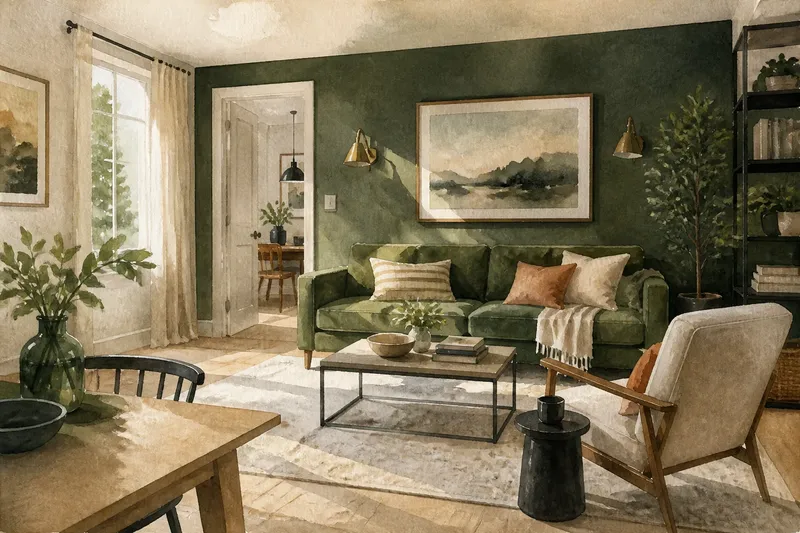
The common mistake with a feature wall is choosing the boldest paint or wallpaper before deciding where the room’s furniture and focal points belong. A striking surface may cost time and attention, yet leave the space feeling lopsided if the sofa, lighting and views across the room still pull in different directions. A feature wall can give a room character; it cannot take the place of a room plan.
What does a feature wall do?
A feature wall gives one surface extra visual weight. Colour, patterned wallpaper, timber, exposed brick or a carefully composed arrangement of art can make that wall easier to notice. The effect is strongest when the wall has a clear relationship to the room’s use, such as the wall behind a bed or the one facing the main seating area.
That emphasis is not the same as organising the room. A wall can attract attention without making it clear where to sit, how to move through the space or which objects matter most. Think of it as one part of the room’s visual structure, not a fix for every other part.
Before choosing a finish, name the role you want the wall to play. It might anchor a dining table, give a plain alcove definition or bring a calm background to a bed. If its role is hard to describe, the room may need a furniture or lighting decision first.
Which wall should you choose?
Choose a wall that already has a useful relationship with the room, rather than the one that simply looks largest. In a sitting room, that may be the surface seen from the entrance or the wall behind a sofa. In a bedroom, it may be the headboard wall. A narrow wall beside a doorway can be a poor candidate if the finish is barely visible.
Look from the places where people actually spend time. Stand in the doorway, sit on the sofa, and check the view from the dining chair. Notice whether the chosen wall is visible without turning away from the room’s main activity. Also check what competes with it: a television, a window, a fireplace, a large mirror or a busy shelving unit can all become strong focal points.
There is no rule that a feature wall must be the first surface seen on entering. A bold wall at the far end of a room can draw the eye through the space. But if it visually stops the room while a doorway or passage needs to remain clear, the effect may feel awkward. Let the routes through the room guide the choice.
How does furniture affect it?
Furniture changes how much of a wall is visible and where its visual weight sits. A tall bookcase may cover much of a painted surface. A low sofa can leave a large expanse of colour above it, while a high-backed chair may divide the wall into smaller areas. Make the furniture arrangement before treating the wall as a finished composition.
Balance matters more than symmetry. A dark wall can feel settled when a substantial sofa sits in front of it, but the opposite side of the room may need a floor lamp, artwork or a cabinet to carry some visual weight. Those pieces do not need to match. Their scale, shape and contrast simply need to make sense together.
Imagine you have a pale sitting room with a deep green wall behind the sofa. If the sofa is shifted towards one corner, the green may appear to gather on that side, while a lightweight chair and a bright window occupy the other. Moving the sofa into a more considered relationship with the wall, then adding a lamp or artwork where the room feels empty, could make the whole view feel more composed. The aim is not to copy a symmetrical layout, but to make each side feel intentional.
Use masking tape to mark the approximate edges of a large artwork or the intended position of a headboard before committing to a finish. This helps reveal whether the wall’s emphasis will sit behind the furniture or appear to float above it.
What do sightlines change?
Sightlines decide how a room reads from one point to another. A feature wall that works from the doorway may feel too dominant from the sofa, or disappear behind an open door. Check the room from its main viewpoints, including any route between the entrance, windows and seating.
Keep the first view legible. If a patterned wall, a large television and a crowded mantel all compete for attention, the eye has no clear place to rest. You do not have to remove every competing object. You might instead simplify the mantel, move a smaller picture or select a quieter wall treatment.
Windows need special attention. Daylight changes how colour and texture appear, and curtains can cover part of the surface. A rich paint colour may look calm in one corner and more intense where light falls directly on it. Consider the room at different times of day before deciding how much contrast you want.
Should the wall be bold?
Not necessarily. Bold colour and strong pattern are only two ways to give a wall presence. A muted shade that differs gently from the surrounding walls can define a seating area without taking over. Texture, a line of framed prints or a change in material can also create emphasis.
Choose intensity in relation to the rest of the room. If the rug already has a strong pattern and the sofa is a saturated colour, a restrained wall may help those elements sit together. If the furnishings are simple, a more assertive surface may provide useful contrast. Neither choice is inherently better; the question is what the room needs to feel coherent.
Colour also has neighbours. A wall’s apparent warmth or coolness shifts beside timber, upholstery, flooring and the other painted surfaces. Bring samples into the room and view them next to those materials, rather than choosing from a small display card in isolation. The product label and maker’s guidance determine how a particular paint or wallcovering should be prepared and used.
Can a feature wall make a room feel smaller?
It can, particularly if a very dark or busy surface draws attention to a short wall or makes a narrow room feel visually divided. But contrast does not automatically shrink a space. A clear focal point can also give the eye somewhere to land, while a continuous finish may make a long room feel more unified.
Look at the wall’s position and the room’s proportions rather than relying on a blanket rule. A strong colour on the far wall may make a long room feel shorter; the same colour behind a sofa may simply anchor the seating. If you are unsure, try a removable wallpaper sample or paint a board and move it around the room. This lets you inspect the effect from several angles without treating one viewpoint as the whole answer.
How can the room feel balanced?
Start with the activities and routes. Decide where people sit, read, eat or pass through. Then place the larger pieces of furniture so doors and windows remain usable and the room’s main movement feels natural. Only after that should you judge whether a wall needs extra emphasis.
Make a quick inventory of what already draws the eye: furniture, art, lighting, a fireplace, a view or a patterned floor. A room may already have enough focal points. In that case, the best wall treatment may be a quiet one that lets those elements work together.
- Check the main view from the doorway and the usual seating position.
- Notice whether furniture hides the wall or leaves an awkward empty strip.
- Compare the wall’s contrast with the rug, upholstery, curtains and flooring.
- Look for other strong focal points that may compete with it.
- Keep door swings, windows and everyday routes in view while arranging furniture.
- Try a sample in the room before choosing a permanent finish.
A balanced room does not require every object to match, nor does it need a single dramatic surface. It needs the parts to make sense from the places people use. If the wall treatment is doing all the visual work, pause and consider whether the furniture, lighting or arrangement needs attention instead.
The feature wall works best when it supports the room’s existing purpose. Treat it as one decision among several, and the result can feel distinctive without asking one surface to solve what belongs to the whole room.